About this Article
MAST StaffNew HLSPs for March
HALO-TESS: The brightest stars in TESS are saturated, producing long bleed columns that complicate simple aperture photometry. This data release includes 411 light curves from 98 of the brightest stars in TESS, observed in Sectors 1-93. Using this data, the team finds that 77 of the 98 stars are variable!
TEQUILA(TESS Quick-Look and Lightcurve Analysis) is a catalog of variable point sources from TESS FFIs in Sectors 1–26. The project uses a Difference Image Analysis pipeline to create 6,000,000 lightcurves capturing a wide range of variability: stellar variables, transient events, and solar system objects
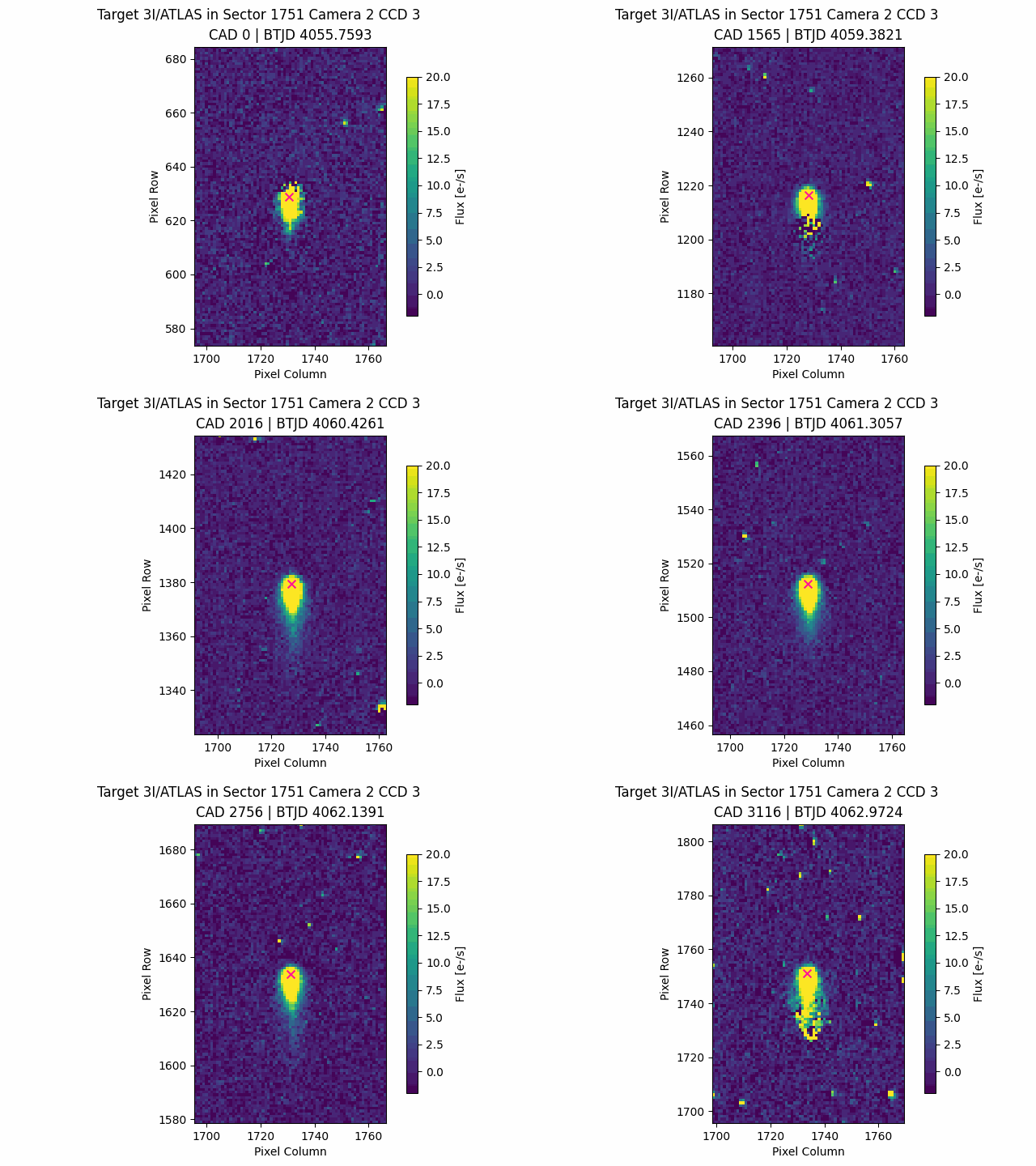
TESS-3I includes background-corrected images and light curves of interstellar comet 3I/ATLAS, from observations taken in Jan 2026. The high-precision, near-continuous photometry may provide unique insights into the comet's activity as it passes through the inner solar system.
Updated HLSPs for March
QLP light curves from Sector 99 are now available, adding 2,149,786 targets at 200 second cadence.
SMILES Data Relase 2 public at MAST. JWST/NIRSpec medium-resolution spectra and catalogs for 166 galaxies at cosmic noon and beyond, with rich ancillary data enabling studies of obscured AGN, galaxy evolution, multiphase outflows, and environment trends.
TESS-SPOC adds 159,994 targets from the Sector 82 FFIs.