About this Article
MAST StaffNew HLSPs for April
NGC5044-HST analyzes the morphology of ionized gas filaments and dust structures in the center of NGC 5044. This enables studies of the spatial relationship between warm ionized gas, dust, and sites of recent star formation in this nearby galaxy group.
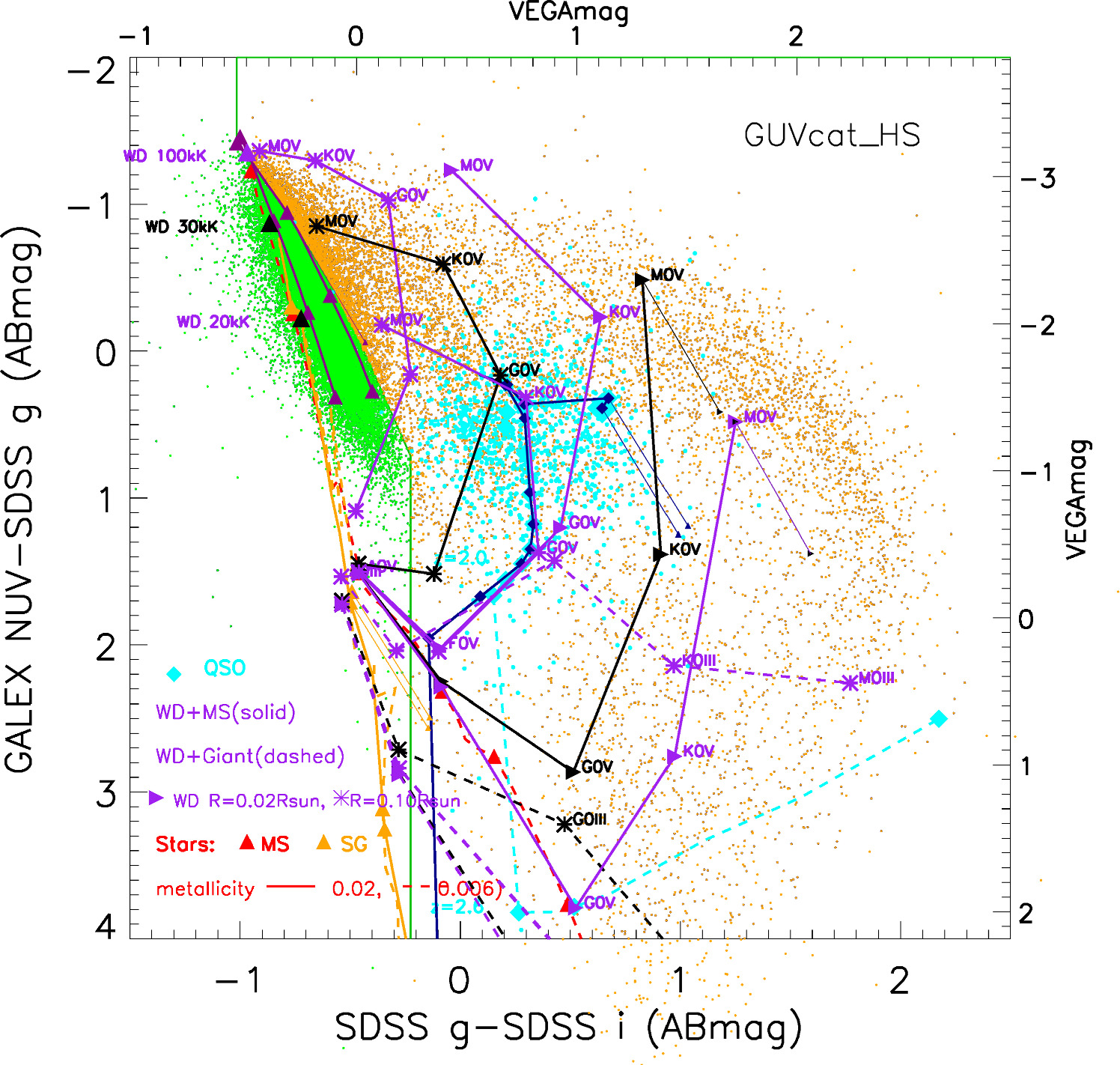
GUVCAT-HOTSTARS is a set of catalogs derived from 71k GALEX UV sources with FUV - NUV colors <= 0.1 mag that also have SDSS photometry, corresponding to stellar Teff>~20,000K. Most sources are hot white-dwarfs and sub-dwarbs. 51% of the binary candidates and 20% of the single-star candidates are previously unknown objects.
Updated HLSPs for April
OPAL adds HST observations of Jupiter Cycle 32 from December 2025
QLP light curves from Sector 100 are now available, adding 2,049,834 targets at 200 second cadence.
REFERENCE-ATLASES includes four changes: (1) new ACS, COS, and STIS throughputs; (2) new radial velocities for Vega & WD0308-565, along with new WFC3 grism spectra, WFC/ACS photometry, and STIS spectra (3) updated WFC3 IR throughput tables, including corrections for time-dependent sensitivity loss; (4) new filter sets: Gaia EDR3 blue and red; filters z, y, j, h and ks for the VISTA VIRCAM instrument; and ten filters aboard the ASTROSAT UVIT instrument.